
Pakhiara Valarakhan Vichriyaa (Birds Separated From Their Flock) by Gobind Malhi
This 1953 book written by Gobind Malhi fresh from his own Partition experience, has hero Sanwal refusing to leave Sindh even when all his family and friends do. The book describes the situation of Partition vividly, and through Sanwal’s dogged determination not to succumb to a political categorisation of religion, the author conveys the Sindhi Sufi ethos which puts humanity above all. Translated into English as The Anguish of Separation by Sindhishaan and published by Shobha Chandnani in 2014.
Yerwada jailajyu kahaaniyoon by Rita Shahani
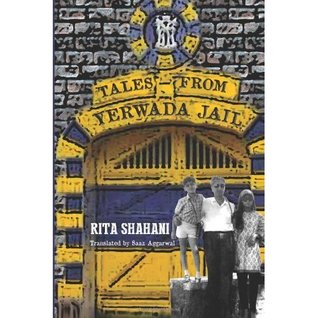 Written in 1999, Shahani drew on the bedtime stories her husband Vishnu would tell their children about his life as a freedom fighter. This book uses different voices with different perspectives to present an all-round view of the Indian freedom struggle, the RSS, the bitterness at the loss of Sindh – on 15 August 1947, Vishnu ripped up the flag in anguish – and some changes that took place after Independence. Translated into English as Tales from Yerwada Jail by Saaz Aggarwal with the author in 2014.
One of the most prolific, original and vibrant Sindhi writers of recent times, a feminist role model, was Popati Hiranandani. Her autobiography and selected stories, The Pages of My Life, was translated from Sindhi by Jyoti Panjwani in 2010. Popati writes about her life in Hyderabad as a young girl, and her mother’s struggles to take care of the family after her father died. She describes the escape from violence and the traumatic resettlement, followed by her life as a writer in independent India. The stories are a fictionalised extension of the autobiography and their main themes are gender, Partition and social injustice.
Sindhi novels about Partition are few, but there was a huge outpouring of short stories and poetry in the anguished aftermath of separation, loss and struggle. Unbordered Memories, a collection of short stories, was translated by Rita Kothari in 2009. Freedom and Fissures, an anthology of Sindhi Partition poetry was translated by Anju Makhija and Menka Shivdasani with the poet Arjan ‘Shad’ Mirchandani in 1998.
Hem’s father is the mukhi of Tharushah. Away at Shantiniketan when Partition takes place, he becomes a successful and well-paid journalist in independent India. However, the feeling of being lost and not fitting in persists. This book is about his anguish, his conviction that he needs Sindh as much as Sindh needs him. He wanders through Kachchh, crosses the salt desert towards the border, and is never seen again. Tarandara Badal (clouds transgress borders) was written in the late 1990s by Krishin Khatwani, himself a student at Shantiniketan when Partition took place
Contributions by Kuldeep Kumar, Sakoon Singh, Mahtab Alam, Sanjay Sipahimalani, Shikha Mukherjee and Saaz Aggarwal.


No comments:
Post a Comment