30 August 2022

About REFUGEES IN THEIR OWN COUNTRY by Sunayna Pal

Refugees in Their Own Country distills the immense trauma of Partition into seventy-five short, illustrated verses — one for each year since 1947. What makes the collection remarkable is the distance of its author from the event itself. Writing as a third-generation descendant of refugees, Sunayna Pal inhabits the inherited pain of displacement with startling immediacy.


The poems are compact, pared-down, and visual — each a snapshot of memory and loss. Using simple English, they reach readers of all ages while evoking powerful emotional and historical layers. Pal writes of ordinary objects — sand, bricks, doors, toys, papads — yet through them captures a civilization’s unmaking. Her voice is not that of witness but of listener, piecing together fragments from grandparents and survivors, and transforming them into accessible, moving verse.


There is deep empathy in these pages, but also clarity. The poet does not dramatize suffering; she humanizes it. By naming the unspoken and evoking the silenced, Refugees in Their Own Country becomes both memorial and mirror — a gentle yet piercing reminder that the story of Sindh, and of Partition’s refugees, remains incomplete until it is truly heard.


25 August 2022

Review of Maverick Effect by Harish Mehta in Hindustan Times

A book that weaves together the personal journey of one of India’s earliest tech entrepreneurs with his role in founding and growing NASSCOM


Not that long ago, we lived in an India where businesses could not run if they followed the rules. Traditional firms were large and family-run, perceived as greedy, self-serving, intent on gaining profits and evading taxes. Corruption was so ingrained that when politicians worked with businesses, they could only do so secretly.

And we were a population that waited patiently for telephone lines, gas connections and scooters for years at a time – offering them as tempting dowry components, greasing palms to get ahead in the queue, believing that things were never going to change because this was our karma.

When did the page turn? When did we start to value professionalism and aspire to prosperity with a more relaxed confidence? And who or what pressed the button?

While there is a tacit understanding that the global IT opportunities were responsible for the social and economic changes of the last few decades, the transformative role played by NASSCOM has never been properly acknowledged and this book attempts to do so.

It is a book that weaves together Harish Mehta’s personal journey, his life as one of India’s earliest tech entrepreneurs, and his role in founding and growing NASSCOM. And it has received lavish endorsements from the senior leadership of the corporate world and Indian bureaucracy.

The Maverick Effect walks us through that soon-to-be-forgotten terrain, a time when INDIAN EXPRESS carried a headline about ‘Softwear’. A time when a customs officer asked for samples of what was being exported, Harish Mehta handed him a floppy disk, and the officer thrust a stapler pin through the disk to attach it to a form, blithely uncaring that he had ruined it. And once, when a senior bureaucrat was told that the software business’s potential could be $1 billion, his guffawed retort was, “Young man, do you know how many zeroes are in one billion?”

Bureaucracy was that nasty barrier which forced young entrepreneurs into paperwork battles in government offices, draining away energy that should have been reserved for innovation. However, this book showcases the many officials who helped achieve their goals, year after year, without a single incident of bribery. It is equally subjective in documenting the resistance to NASSCOM’s efforts by MAIT, another more traditional industry body.

When NASSCOM was established, its aim was government-industry collaborations that would fuel intelligent economic strategy and give the Indian IT capability access to world markets. Perhaps what made it unappealing to powerful lobbyists was that these efforts were never restricted to favoured members but on benefits for the entire industry. There were bureaucrats who welcomed this new approach of a level playing field and an ‘India first’ strategy. Even the dissenters soon saw that when the pie increases in size, each slice is going to be larger too.

The new culture that developed inadvertently drew from the non-hierarchical US business environment and its related efficiency, the Jain teachings Harish Mehta was brought up with, and partly the influence of the European Union where competing entities collaborate for the greater good. A cohesive team came together with no personal agenda and a ‘growth mindset’; with no room for elderly statesmen or a laddering system. What a welcome wind of change!

It was a time of transition when it suddenly felt like the future had arrived – data transfer that once took days got done in hours! But it was still an India where a telecom minister might inquire, “Yeh bandwidth kya cheez hai”. The dawning of India as a ‘technology destination’ took place in this flurry of opportunity, confusion, continuous activity, and persistent effort from NASSCOM.

This book also examines larger issues, condensed in time by the extra-swift passage of this significant historical era. Why were software services and outsourcing essential to incubate an ecosystem and build a critical mass before moving to IP-driven output? Would MNCs entering India be the ruin of us, or help us move to a higher and more stable ground? Were the Indian engineers working in the US, struggling to cope with an unfamiliar climate, the lack of domestic help and vegetarian food, the fire-alarms that rang out when they tried to cook – really stealing jobs or simply enhancing the efficiency of the US business environment?

One of the most dramatic events this book describes is the 2009 scandal when the gentle and endearing Ramalinga Raju, founder of Satyam Computer Services, then India’s fourth-largest IT company, stood up and publicly confessed to a massive accounting fraud. NASSCOM immediately rallied round to protect Brand India (which it had struggled to establish), ensuring that Satyam would continue to deliver its client commitments, and forbidding competitors from poaching.

There is also an in-depth profile of Dewang Mehta, for a long time the face of NASSCOM but with the kind of personality which made him unpopular among some. The author’s paean to Dewang’s commitment to growing the Indian economy through IT, and Dewang’s fundamental patriotism and love for India, is moving indeed.

This, book written by an engineer-entrepreneur, conveys emotion with skill. Its nuances and creative metaphors reflect the author’s exposure to poetry from a young age.

first appeared here on Aug 25, 2022

20 August 2022

Written for wire.in for Independence Day 2022

For Sindhis, Partition Meant Loss of a Homeland, of a Culture and a Language

The community however turned hardship into success and thrived by assimilating into the host society.


Sometime in mid-2012, I asked Niranjan Gidwani to tell me his family’s Partition story.

Till then, I’d only known Niranjan as my husband’s friend, a good guy, and never thought about him as a Sindhi or anything like that. But I’d just started working on a book about Sindhis and it was amazing how all kinds of unexpected sources were popping up. Niranjan told me some interesting things, including how his grandfather, a fairly well-off and influential person in Sindh, went missing in the turmoil before Partition. His younger son was general manager of the Great Indian Peninsular Railways, and arranged for a private bogey for the family to move their things as they left Sindh. However, the labour bringing their furniture and personal belongings never reached the station. Later, his grandfather's body was found cut up in pieces in a sack, under a railway bridge. “Till today,” Niranjan said, “no one really talks about this.”

This was the first example I’d heard of barbaric atrocity coming out of Sindh, and over ten years and many interviews, it is still one of very few. Even with no one really talking about such things, the extent of violence in Sindh is of a completely different scale to what happened in Punjab where there was no family without its own horror story. This is one of the big differences between what happened in Sindh and what happened in Punjab, and it’s the main reason why people who left Sindh always considered themselves the lucky ones and did not feel they had a story to tell.

What somehow slipped out of this broad context was that while Punjab and Bengal were split in two, Sindh was given intact to Pakistan. And when the minority community Sindhis were forced out by ominous threats and pointed discrimination, they had to start afresh in unfamiliar places among unfamiliar people, where the food, clothes, habits were different from what they were accustomed to – and the language was written in the opposite direction.

Many Sindhis settled in centres of employment and trade – Bombay, nearby Pune, Delhi, and places easily accessed from the border including Ahmedabad and Ajmer. Aruna Jethwani, 13 when Partition took place, remembers that neighbours in Ahmedabad and Nadiad were good and helpful. However, before renting an apartment, her father had to sign a declaration that no meat would be cooked or eaten on the premises. Reaching out to touch laundry flapping on a line one day, she knew what it meant to be an inauspicious omen when a woman screamed, “Nirvasi chho – you are homeless!”

The taint of disdain was felt all over.

In Gibraltar in October 2013, Suresh Nagrani stood up to speak after my talk. “When I was young,” he started, “I thought all Indians were Sindhi.” Everybody laughed. The thing is, though, the Indians native to Gibraltar are indeed all Sindhi. They form part of the trade diaspora that originated in the 1850s, soon established itself in ports around the world, and was documented as recently as 1999 by Claude Markovits. Suresh went on to describe the jolt he got at university in England where he met Indians from different parts of India – and one of them said to him, “Oh, so you are a Sindhi. Let me ask you a riddle. If you meet a Sindhi and a snake, which one should you kill?”

Perhaps the prejudice Sindhis faced began after Partition when many of the homeless ones took to trading at low margins, creating resentment among established traders. Perhaps this was reinforced by negative characters in Hindi films who had Sindhi names and said nasty, exploitative things in Sindhi accents – even until the 1990s.

Beneath that public perception lies a gentler reality. Reyhaan Datta who grew up in Calcutta remembers a Sindhi sari seller from whom her mother bought beautiful saris – a softspoken person whom her mother would offer tea. One day he told them that it would be his last visit. He had been a skin specialist and had left Sindh with his wife and mother with nothing but the clothes on their backs. Selling saris from door to door and living simply, he had now saved enough to buy a practice with a leading Calcutta skin specialist.

It is stories of this type that pervade every family that left Sindh.

From the ‘refugee camps’ in which the new Government of India accommodated the masses displaced by Partition came many schools, colleges, other institutions that continue to serve the community. Being homeless, the Sindhis built homes for themselves; in time, they would change the skyline of these cities. Scattered over the globe with a few pockets of some density, the Sindhis rebuilt their lives of comfort and dignity by integrating into the communities where they settled. For a community that lost all their material possessions, they were able to regain a remarkable degree of prosperity in time. And, just as this heterogenous community had behaved as one when leaving their ancestral homeland without looking back – most families spontaneously stopped talking to their children in their mother tongue.

The languages we grow up with, the words and expressions used around us, influence our thoughts and behaviour. And the Sindhi of 1947 was a language packed thick with phrases and concepts from the region’s philosopher poets of the previous few hundred years.

Herkishendas Melwani left Sindh in 1939 to work in the global retail chain of Lalchand Dhalamal, was never able to return when exiled by Partition, and settled in Shillong. Anglicized due to his social station and education, Herkishendas valued his Sindhiness and quoted and lived by his Sindhi pahakas (sayings). One day a fire on GS Road burnt down six shops and he too suffered great losses. When asked, “Saba mey bhali – there is good in everything – really?” He replied, “Yes, now even more than before. “Hikri lati sau pati – when one door closes, another 100 open.” His son, Murli Melwani (PhD in English Literature and a professor at Sankerdeb College until he too fell prey to political forces and left his hometown Shillong, becoming a businessman in Taiwan and later the USA, acknowledged recently by Sahitya Akademi as a Sindhi writer who contributes to languages other than Sindhi) wrote about his father’s classic Sindhi response here: systematically restoring and recouping, adjusting losses against goodwill, ensuring that credit lines remained open.

The Sindhi pahakas – shaped by and reinforcing the multi-faith harmony of the land – defined the mindset of a people who chose to accept their fate, protect their womenfolk, adapt to lives in other places. They continue to pervade the Sindhi identity. Somewhat. Because there is no place the community has access to where their language is spoken on the streets. Sindhi is a language that you only hear in the homes of relatives, it’s the language of intimacy, of the lost country. It is the language you hear your grandparents speak to each other and to those of their children who knew Sindh – never to you. Because you had never known Sindh, and it would be impossible to explain anything as important, as essential, and as complicated as that.

First appeared here on 19 Aug 2022

16 August 2022

Foreword to REFUGEES IN THEIR OWN COUNTRY by Sunayna Pal


Foreword 

The extent of pain and trauma that took place during Partition – the massacres, destruction of families, material loss, displacement of communities and other ordeals – covered such a wide spectrum that it took decades for the subject to even be approached. The process of unravelling and trying to make sense of what happened continues, but the far-reaching consequences may never be fully comprehended. With the silence of decades, our understanding will always be based on conjecture or extrapolation.

It took fifty years for Urvashi Butalia to begin the process of documenting the experiences women had during Partition. An entire half of the displaced, denuded and dismembered population had such a dramatically different story than what had been previously recorded!  The fact that it had been completely ignored for fifty years carries its own message.

Ten years later, when Nandita Bhavnani started exploring the Sindh story – so very different from what had happened in Punjab or Bengal – it was still seen as inconsequential.

Unlike Punjab and Bengal, Sindh was never partitioned. Hindus were a comfortable minority, well integrated in the province for centuries. It was believed that this would continue after Partition. However, 1947 onwards, they faced continuous threats, communal violence and discrimination. As time passed, the situation deteriorated and the naively anticipated ‘normal’ became a chimera.

Here was a population that had not seen dead bodies on the streets. Not too many heaps of them, that is. There were neither drama nor loud retellings. All they wanted was to resume their lives of comfort and dignity. And so they worked hard, used their enterprise and their historical advantages – and quietly integrated.

At first, what was lost was seen as merely material. What was not seen was that, along with the material loss – hugely significant material loss – so much else was also lost. Relationships. A way of life. Familiarity and connection with the land. Families once tightly connected were abruptly scattered. Elders died of broken hearts. The trauma which enveloped the community would continue to manifest in different ways for generations to come. Parents stopped speaking to their children in their mother tongue. Old customs gave way to new ones. The violent severing caused huge chunks of history to vanish, especially recent history. To resurrect it would be a long and perilous task.

The eruptions of Partition caused sparks to fly and scatter. Amidst the agony and trauma, amazingly, instances of beauty arose too. There were the personal sacrifices made to protect members of the other community. There were the sagas of the heroic rebuilding of lives. There were the remarkable, indomitable, institutions that arose from the refugee camps. Many Sindhi writers produced outstanding works of Partition-related literature and some of it has been translated into English by writers like Rita Kothari, Anju Makhija and Menka Shivdasani.

The case of Sunayna Pal and her delightful Partition Poetry is unique.

First, she herself is from a generation quite far removed from Partition. Even her parents were born in the 1950s. She grew up in a Sindhi family, but not immersed in a Sindhi community. Like very many Sindhis of her generation raised in urban, cosmopolitan India, Sunayna’s representation of her ethnic identity remained nebulous and sometimes defensive. “I have played a game all my life,” she says. “When anyone asks me where I am from, I reply, ‘guess’.” The answers come, naming states of India, south, east, north. “Further north,” she encourages the smiling questioner to go on. By the time they conclude that she is Sindhi, the connection to Pakistan, she observes ruefully, has caused the smile to disappear.

Second, the influences upon her were limited. Partition was never the focus of specific conversations around her as she grew up. She did not have continued or intense interactions with her grandparents. All she knew was that they had escaped from Sindh across the new border, and found solace in refugee camps set up by the new government of the newly-independent and newly-severed nation. When an English teacher – Sunayna was her favourite – mentioned her admiration for the Sindhis who had lost everything to Partition but worked hard and established themselves, she rushed home to excitedly share this lovely affirmative observation. Her mother agreed, but in a noncommittal way.

Sunayna’s father’s eldest brother took care of Sunayna and her sister when their parents were away at work. Ram Chacha was their link to the old country, and his reminisces appear to have awakened a latent poetic talent. When Sunayna’s mother complained of dust in their Mumbai home, Ram Chacha spoke wistfully of the abundance of sand in his home in Sindh. When she applied henna on her hands, he described how women in Sindh plucked henna and rubbed the crushed leaves on their hands. Thirteen years old when he left his home in Nasarpur for a new home in a new India, he told Sunayna that he had sat in the ship, petrified that the building on water would sink. And he occasionally told her of his deep desire to visit his home in Sindh. As Sunayna grew up, she began to feel like going there too. Interviews with other Sindhi grandmothers and grandfathers gave Sunayna glimpses into life in Sindh during Partition. Somehow the fragmented impressions came together to create in her a visceral reaction which filled her with the passion to describe the wonders of Sindh to the world.

Third, Sunayna does not have a strong literary background. She loves to read but doesn’t read much. Her writing uses American spellings and her structures are grounded in Indian English. Her verses make an impact even though she is yet to master the range of short poetic forms. “They came to me,” she says of them; they could be considered ‘ayat’ – inspired verses (as were those of Shah Abdul Latif). Each captures, in a few well-chosen words, core, iconic issues of the experience of Partition. Coming from a third-generation survivor, a young mother who lives in the US with her scientist non-Sindhi husband and their two little sons, Sunayna’s verses are uncannily close to the bone. 75 verses, on the 75th anniversary of Partition, they form a primer for anyone, across generations, interested in an encounter with syncretic human cultural experience.


Saaz Aggarwal
July 2022


15 August 2022

The Pain of Partition, as Seen in the Literature of Many Languages

Novels, stories, poetry – there were many ways that authors expressed what they saw during that harrowing time and after: a contribution to a piece in wire.in about Partition literature.

Sindhi 

Pakhiara Valarakhan Vichriyaa (Birds Separated From Their Flock) by Gobind Malhi

This 1953 book written by Gobind Malhi fresh from his own Partition experience, has hero Sanwal refusing to leave Sindh even when all his family and friends do. The book describes the situation of Partition vividly, and through Sanwal’s dogged determination not to succumb to a political categorisation of religion, the author conveys the Sindhi Sufi ethos which puts humanity above all. Translated into English as The Anguish of Separation by Sindhishaan and published by Shobha Chandnani in 2014.

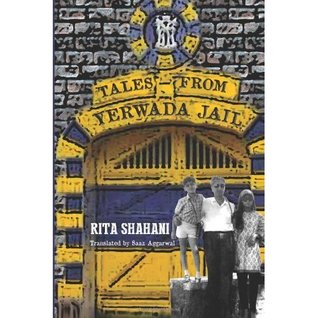
Yerwada jailajyu kahaaniyoon by Rita Shahani

Written in 1999, Shahani drew on the bedtime stories her husband Vishnu would tell their children about his life as a freedom fighter. This book uses different voices with different perspectives to present an all-round view of the Indian freedom struggle, the RSS, the bitterness at the loss of Sindh – on 15 August 1947, Vishnu ripped up the flag in anguish – and some changes that took place after Independence. Translated into English as Tales from Yerwada Jail by Saaz Aggarwal with the author in 2014.

One of the most prolific, original and vibrant Sindhi writers of recent times, a feminist role model, was Popati Hiranandani. Her autobiography and selected stories, The Pages of My Life, was translated from Sindhi by Jyoti Panjwani in 2010. Popati writes about her life in Hyderabad as a young girl, and her mother’s struggles to take care of the family after her father died. She describes the escape from violence and the traumatic resettlement, followed by her life as a writer in independent India. The stories are a fictionalised extension of the autobiography and their main themes are gender, Partition and social injustice.

Sindhi novels about Partition are few, but there was a huge outpouring of short stories and poetry in the anguished aftermath of separation, loss and struggle. Unbordered Memories, a collection of short stories, was translated by Rita Kothari in 2009. Freedom and Fissures, an anthology of Sindhi Partition poetry was translated by Anju Makhija and Menka Shivdasani with the poet Arjan ‘Shad’ Mirchandani in 1998.

Hem’s father is the mukhi of Tharushah. Away at Shantiniketan when Partition takes place, he becomes a successful and well-paid journalist in independent India. However, the feeling of being lost and not fitting in persists. This book is about his anguish, his conviction that he needs Sindh as much as Sindh needs him. He wanders through Kachchh, crosses the salt desert towards the border, and is never seen again. Tarandara Badal (clouds transgress borders) was written in the late 1990s by Krishin Khatwani, himself a student at Shantiniketan when Partition took place

Contributions by Kuldeep Kumar, Sakoon Singh, Mahtab Alam, Sanjay Sipahimalani, Shikha Mukherjee and Saaz Aggarwal.

First appeared in wire.in on 14 August 2022
You can read the rest of the article on this link

14 August 2022

How refugees from Sindh rebuilt their lives – and India – after Partition in scroll.in

The community’s many losses and the distortion of their history is only now being acknowledged.
by Saaz Aggarwal
Bhai Pratap looks on as Jawaharlal Nehru inaugurates Kandla Port, 1952. Image courtesy Pratap Kriplaney, grandson of Bhai Pratap

What happened in Sindh during Partition was not considered consequential until quite recently. In comparison with the grisly violence and graphic images associated with the process, the Sindhi side of the story paled into insignificance. I Will and I Can, the story of Jai Hind College by Nandita Bhavnani was among the first mainstream publications that gave a glimpse into this “refugee” community and its many contributions – in 2012. With this and her subsequent work, a rich and complex tapestry began to emerge.

In these ten years, a growing swell of voices have shown that the dominating images of Partition – the trains filled with dead bodies and the women forced to jump into wells to save the family “honour” – are only elements of the picture.

There are many factors which make the Sindh story different. Originally a Hindu and then Buddhist land – as was the rest of India – Islam came to Sindh as early as CE 711. It grew steadily and peacefully with Sufi values of tolerance, integration. Fluid belief systems dominated all forms of worship. This ecosystem endures among Sindhis even today, in locations around the world.[S1] 

Through centuries of paying tribute to Delhi and Kabul, indigenous prince of Sindh ruled largely undisturbed. Non-Muslims migrated from neighbouring provinces confident of a relatively non-discriminatory environment – Nankapanthis from Punjab, and worshippers of various Hindu deities from other parts. Over time, they evolved into a comfortable, prosperous minority with an eclectic belief system.

Hindu temple in Malaga, Spain, Saaz Aggarwal, 2013

One group served in the courts of the princes, rising to positions of responsibility and even power, and came to be known as the Amils of Sindh. The larger part of the community were traders, from the omnipresent village grocer and moneylender to those with a larger reach and empires that stretched inland all the way to Russia, China and Japan and Iran on the other side.

The British occupied Sindh in 1843 – in gross violation of treaties of eternal friendship with the princes – their descriptions of the barbarism a transparent and rather weak defence of the annexation. They also wrote of the sad plight of the Hindus, but a closer look at indigenous accounts of the time reinforces the “comfortable, prosperous minority” version.

The British occupation was a setback to the traders of Sindh but they soon used the opportunity to expand using the steamship routes and set up retail outlets in ports around the world. In 1999, a French scholar, Claude Markovits, published a detailed account of how this group of South Asian merchants had carved a niche for themselves in a European-dominated world economy. [S2] 

The Amils, meanwhile, had soon been recruited into the British administration and switched quickly from Persian to English. Their commitment to education led to increased opportunities. They began setting up their own schools, and educated their daughters. The Dayaram Jethmal Sind College – Dayaram Jethmal Government Science College [S3] today – one of the finest institutes of higher education in India at the time, was built and funded by the Hindus of Sindh. By the early 20th century, the Hindus were the backbone of the Sindh administration as well as its economy.

All this while, Sindh had been a part of the Bombay Province and in 1936, it was given provincial autonomy. The separation was not made on communal lines but for more administrative care and focused development. In fact it was a Hindu, Harchandrai Vishindas[S4] , who first expressed this need at a Congress assembly in 1913.

However, the separation made the Hindus a minority in a Muslim province, in a larger political situation with festering differences between the two communities. And so it was in Sindh that the question of Partition was first raised. In the annual session of the Muslim League in Karachi in 1938, Muhammad Ali Jinnah made Pakistan the official demand of the Muslims of India. In 1942, the legislative assembly of Sindh passed a resolution supporting the demand for Pakistan.

The DJ Sind Arts College in Karachi in 1893. Credit: Zainub via Flicker, Public domain.

The Second World War was occupying the British and so was the Indian freedom struggle. When Mohandas Gandhi demanded that the British “Quit India!” the response around the country was tremendous, and no less in Sindh. There are numerous examples, not least being the sound system used by the Indian National Congress which was contributed and personally monitored by Nanik Motwane of Chicago Radio, an electrical business that started in Larkana, Sindh, and with head office in Bombay.

Men, women and children of Sindh participated in the freedom movement, most poignant and heroic being the case of 19-year-old Hemu Kalani. Arrested for his participation in Quit India, he was sentenced to death. The response to mercy petitions was that he would be pardoned if he revealed the names of his co-conspirators. Remembers Madhuri Sheth, 13 years old at the time,

He was hanged at midnight and we sat up in wait until the body was cremated behind the primary school where I studied.

When the line of Partition was drawn, it was believed that, well integrated as a religious minority for centuries, the Hindus – about one-fourth of the population – would continue as such. And Sindh was given in its entirety to Pakistan.

As Partition approached, tension rose and reports of the massacres in other areas caused fear and uncertainty. When an influx of migrants entered Sindh from other parts of India, things began to change dramatically. Dr Mohini Hingorani, 17 years old at the time, was a student at DJ Sind College, Karachi. She remembers:

When the trouble started before Partition, Bunder Road Extension where we lived remained unaffected. But Gadi Khata, where the college was, had severe riots and some of my father’s stepbrothers were caught in the crossfire. One of them was killed.[S5] 

Still, the Sindhi Partition story is marked by less violence than in any other area. Karachi remained calm even in December 1947. Cases of abduction and even decapitation were reported – but they were few. This changed with the January 6, 1948, pogrom.

Thirteen-year-old Khushi Khubchandani stood on the terrace of his home and could see mobs carrying away radios, furniture and valuables. If anyone resisted, they were attacked. People escaped mobs who attacked buses by reciting verses from the Quran. A very large number were saved by Muhajirs who put themselves in danger to protect them.

The exodus began, with fleeing people crowding the docks to escape.

Some tried to stay on. Pribhdas Tolani[S6] , a once well-known landlord of Larkana, had no intention of leaving. In October 1948, he was arrested and imprisoned in Sukkur Jail, accused of being an Indian spy. His eldest son, Gopal Tolani, Sessions Judge in Sukkur at the time, could do nothing but watch, in helplessness and despair. When Pribhdas Tolani was released, it was on condition that he leave Pakistan and never return. So it was not just mobs of the homeless and victimized who wanted the Hindus of Sindh out so that they could claim their property – the government too participated.

Mansharam and Rukmani Wadhwani (Dr Mohini’s uncle and aunt) with three of their children, on the second floor of the family building in Sukkur. The beautiful Sadh Belo temple, accessed by boat, could be seen from this terrace which had cots on which they slept at night in summer.

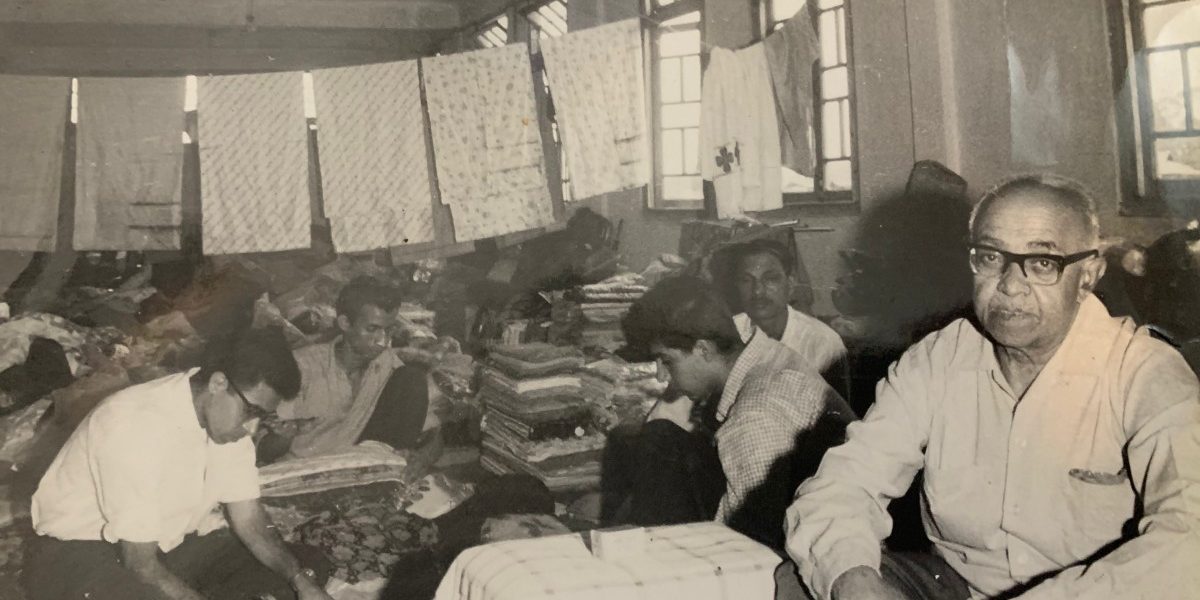
The newly truncated India, economically depleted by centuries of colonial rule, further drained by the Second World War, was hardly in a position to receive the lakhs of fleeing refugees but did make a tremendous effort. Army camps around the country were rundown, but had the infrastructure. The homeless ones were taken there in droves.

Remembered T. Sushila Rao, wife of a camp commandant at Kalyan,

If I ever woke before dawn and looked out, I would see a long line of the Sindhi refugees walking to the station on their way to Bombay for the day to work or trade or study. They had lost everything but did not weep and complain. How hardworking they were!

Sindh had many women doctors and teachers, even in the 1930s and 40s – but most middle-class women did not go out to work. After Partition, women of many families contributed economically. Some used domestic skills, making papad and pickles which their menfolk sold from door to door; some took in sewing. Others went to work as telephone operators, secretaries, assembly-line workers.

Many of these refugees had lost not just their homes and their homeland but also their comfortable lives and sources of livelihood. The Bombay Refugee Act of 1947 was a further slap on the face with the restrictions it placed. The Sindhi community fought back with indignation. By definition, a refugee is a stateless person – and they were in their own country for whose independence they had sacrificed so much! The Act was modified and a new definition, ‘displaced persons’ was coined.

Kaka Pribhdas Tolani (1893-1988) and his sons, Gopaldas, Pribhdas, Nandlal, Chandru, Bombay, c1970s. Having left Sindh with nothing, Kaka Tolani was one of the many Sindhi entrepreneurs who began by building a home for himself and his family, but continued in the ‘construction line’ and went on to build some of the best known-buildings in Bombay. He also built a number of colleges in Gandhidham which are still run by his family. 

Yet another blow came when the constitution failed to list Sindhi as an Indian language. Aghast, the writers and thinkers of the community recruited the young Ram Jethmalani to lead their campaign and Sindhi was included in Schedule VIII of the Indian constitution – but only in 1967. So while Sindhi parents had stopped speaking to their children in their mother tongue in an effort to acquire languages which would help them in their new lives, the state played its own role in the extinction.

The biggest support came from within the community, with doors being opened to members of extended families, friends and business associates. And the wealthy ones were most generous, contributing materially to the camps, providing employment within their enterprises and campaigning relentlessly to the government for matters such as hawking licenses and support in housing development.

There are a very large number of names, too many to list here, but among the best known is Nanik Motwane in Bombay for his extraordinary efforts on behalf of the “refugees” at every level.  Ramnarayan Chellaram in Bangalore contributed with material relief and also helped the “refugees” protect their rights as citizens preparing identity documentation, applications for compensation, admissions to educational institutions and other requirements.

Certificate of domicile of Situ Kishinchand Bijlani, who was 13 years old at the time and lived 30 years as the wife of a planter in the Nilgiris – but preserved this precious document all her life

Sahijram Gidwani lived in Ahmedabad: he had studied at Cambridge and was retained as tutor to Vikram and Gautam Sarabhai through their secondary schooling and later headed the Sarabhai Empire's Calico Mills, which contributed substantially to refugee relief. As the numbers increased, he moved to Bombay and took up an honorary position as chairman of the newly instituted Bombay Housing Board.

One of the most interesting histories is of Bhai Pratap, one of the businessmen with a global retail chain, who with Gandhi's help acquired a piece of land from the Maharao of Kachchh to create a “new Sindh”. It was Bhai Pratap who initiated the development of Kandla Port. [S8] He assured the Maharao that he would bring enough business to Kandla so that it would soon match up to and exceed the volume of trade done by Karachi. He was also instrumental in having Kandla designated as a free-trade zone – Asia’s first – in 1965.

Meanwhile, the refugee camps in Bombay, Poona, Ahmedabad, Ajmer, Bhopal, and other places grew into hives of industry. Being homeless, the Sindhis built homes for themselves. In time, they would change the skyline of these cities. From the camps rose other tremendous institutions – factories, hospitals, educational institutions. For a community that had lost its ancestral homeland forever, the names they chose – Jai Hind, Jai Bharat, National and so on – are poignant indeed.

Seventy-five years later, the Sindhis are respected for their contributions and for the way they have integrated. What is often not noticed is the magnificent way in which this heterogenous community behaved as one: each person, each family, each group felled by Partition simply stood up and kept moving. Their contribution is seen and appreciated – but the loss of their language, music, poetry, philosophy – and the distortion of their history – is only now being acknowledged, as an important aspect of the story of the 1947 Partition of India.

 Saaz Aggarwal is a biographer, oral historian and artist. See her website here.

We welcome your comments at letters@scroll.in.

First appeared here on Aug 13, 2022

HT Podcast: Books & Authors with Saaz Aggarwal, author, Losing Home; Finding Home